

Benjamin Lay was a hunchbacked dwarf of four feet tall. He was also a vegan, feminist, and anti-slavery activist.
I recently read his biography - The Fearless Benjamin Lay by Marcus Rediker1 - and have wanted to write about him ever since. In our darker moments as animal advocates, when we despair about the gigantic challenges in front of us, it can be helpful to look at how others fought the odds and never gave up.
A radical dwarf
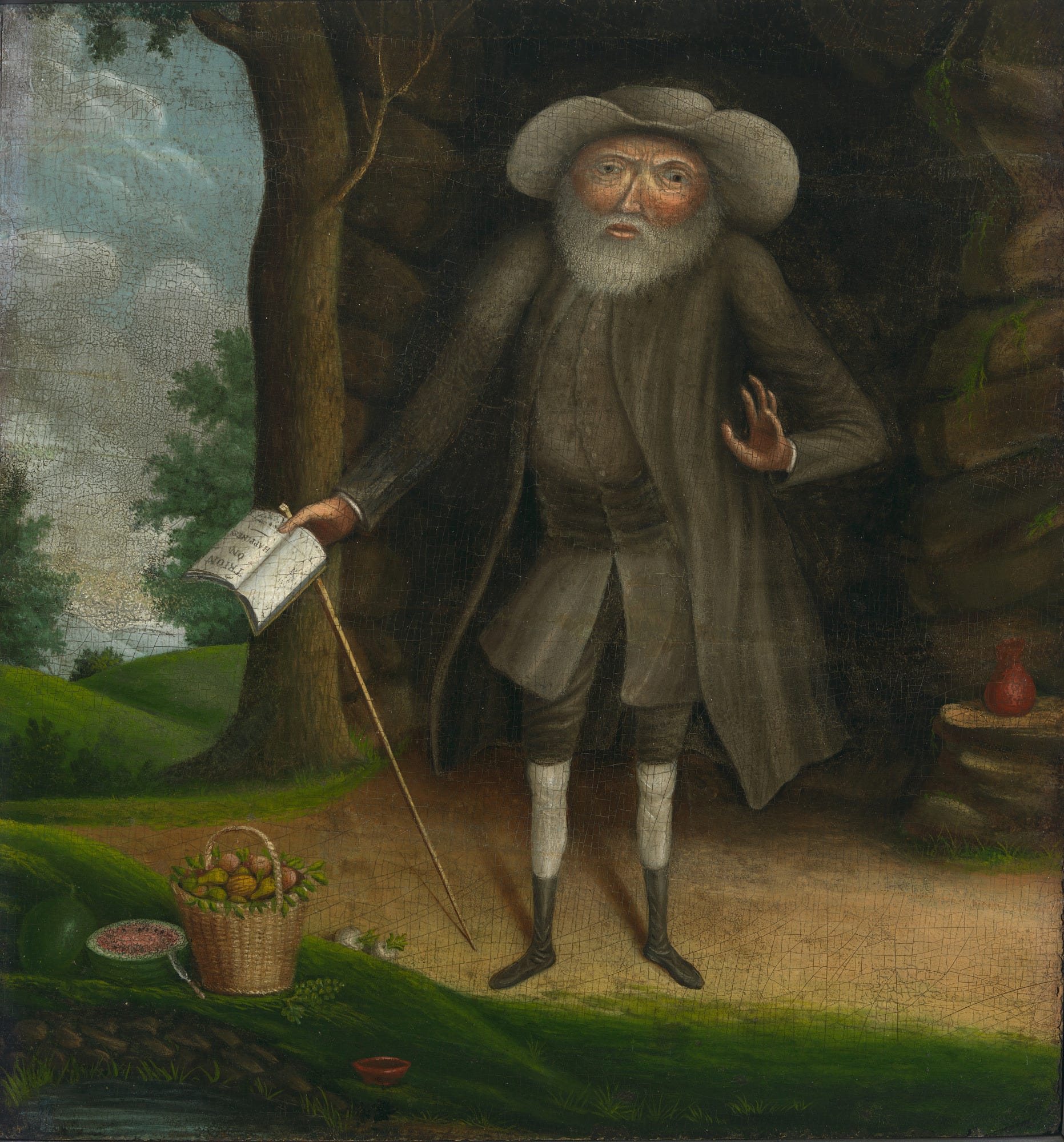
Benjamin Lay was born in England in 1682. He worked as a sailor, a glove maker, and a shepherd. He became a Quaker and married Sarah, who was, just like him, a little person. In the late 1710’s, they went to Barbados together to work as merchants, but were transformed by seeing the evils of slavery (most people on the island were enslaved). Eventually the couple settled outside Philadelphia, and Benjamin spent all his remaining years trying to change what they had witnessed.
He boycotted products from slavery, and fought for abolition for forty years, against the active hostility of his own religious community. The last third of his life, he lived in a cave, next to which he grew his own food in a small garden, made his own clothes from flax because he refused to wear wool, and would not eat any animal flesh at all.
Empathy for little people comes naturally to me. Being only 166 cm (5’5), I know how stature (or lack thereof) can shape how others perceive you (look up heightism). Lay had it far worse. In his own time he was treated as defective. Historians called him “the little hunchback.” His enemies called him deformed in body and mind. In his book, Marcus Rediker argues that being treated as less than human gave Benjamin a moral imagination many of his contemporaries lacked. He knew what it was to be looked through, and carried that knowledge outward, to everyone else he saw being looked through, including animals.
By Rediker’s account, Lay was not a pragmatic or likable activist: he was aggressive, awkward, self-righteous and stubborn. Indeed, he appears to have been a quite obnoxious fellow - possibly a terrible vegan advocate - so we shouldn’t idealize him. But there sure are things to admire in him.
Fellow creatures
This little person mainly fought his own people: the community of Quakers. He challenged them about the fact that in spite of their lofty religious ideals, many of them were slaveholders or were otherwise benefitting from slavery. These were the people he prayed with, the ones who sat beside him in his meeting houses. He was telling those he loved that they were monstrous.
Before Lay became a vegetarian, he killed a groundhog that kept ravaging his vegetable patch, nailing parts of the animal to the four corners of the garden. Not soon after, he regretted what he had done and renounced eating animals. He came to see the connection between the exploitation of humans and non-humans, whom he all called “fellow creatures.” To make clear the connectedness, he quoted Pythagoras:
“As long as Man continues to be the ruthless destroyer of lower living beings, he will never know health or peace. For as long as men massacre animals, they will kill each other. Indeed, he who sows the seed of murder and pain cannot reap joy and love.”
We may not live to see the fruits of our work
Lay fought his various fights for many years, but did not live to see much result. People, including the Quakers, generally didn’t take kindly to his activism. Many said he made slave keeping “too great a sin.” At one point he was physically removed from Quaker meetings (which presumably was not a hard thing to do). He was jailed on occasion. His own Philadelphia Yearly Meeting of Quakers and several other groups ended up disowning him.
Lay died in 1759. The Quakers did not formally prohibit slaveholding among their members until 1776 - which still made them ahead of the rest of the world by a long time (the United States abolished slavery in 1865).
There was a bit of light right near the end of his life, though. A friend brought Lay the news that the Philadelphia Yearly Meeting had finally begun to discipline slave-trading Quakers - which apparently had Lay declare that he could die in peace.
Only in 2017, more than 250 years after his death, the Quakers had the good sense to formally reinstate the man. As of today, most haven’t heard of him.
Animals are still locked up by the billions. Most of the people we love still eat them. Like Benjamin Lay, vegans and animal advocates are considered “too censorious” at the dinner table. Like Benjamin Lay, we may expect (still for quite some time) to be ridiculed, fought and antagonized.
Lay was probably a pretty bad animal advocate, and we shouldn’t copy his self-righteousness. But we can be inspired by the stamina of this small, unusual person - who saw early, alone, and was right.
Further Reading:
The Fearless Benjamin Lay, by Marcus Rediger
Becoming Benjamin Lay: a movie
I draw heavily on Marcus Rediker’s book for this article (all quotes are from it), which the author wrote in part to help reinstate Benjamin Lay.
Thanks for writing this Tobias! Reading this, I feel hopeful, because it helps me to see that we have been passed the baton from those who came before us. It helps me to see that we in this time are not alone. It helps me to anchor into my existence at this time in history, and to realize that I too will pass on the baton to those who are not even born yet. And what an honor it is to hold the baton in this lifetime! In my office, I have a small frame with the words "Because I love my grandchildren" written in it. This reminds me of why I do the work that I do. I wonder what Benjamin Lay thought about us... about people who had not yet been born in his time. It could very well be, that he had us in mind. :)
Thanks for highlighting the wonderful tradition of Veganism within Quakerism starting in the 1700s. The Rediker book is really great, I highly recommend it. If you will allow me to do a little promotion of this tradition leading up to the present day, there is a great timeline found here at the Quaker Vegan Witness website: https://qvw.org.uk/origins/