

Looking at the world and everything that seems to go wrong in it, I often catch myself searching for the one thing that would make it better.
Sometimes I think: if only people had more empathy. Or were more rational.
But those qualities are hard to cultivate on command, and we don’t have much control over how empathic or rational we are.
What we might have more control over, though, is the speed at which we form our opinions.
Most people today, both online and offline, jump to opinions about everyone and everything, often without being the least bit informed. This may lead them to be angry at others for no good reason, or to be thoroughly convinced of something without adequate justification.
The opposite of this is an idea that I call slow opinion.
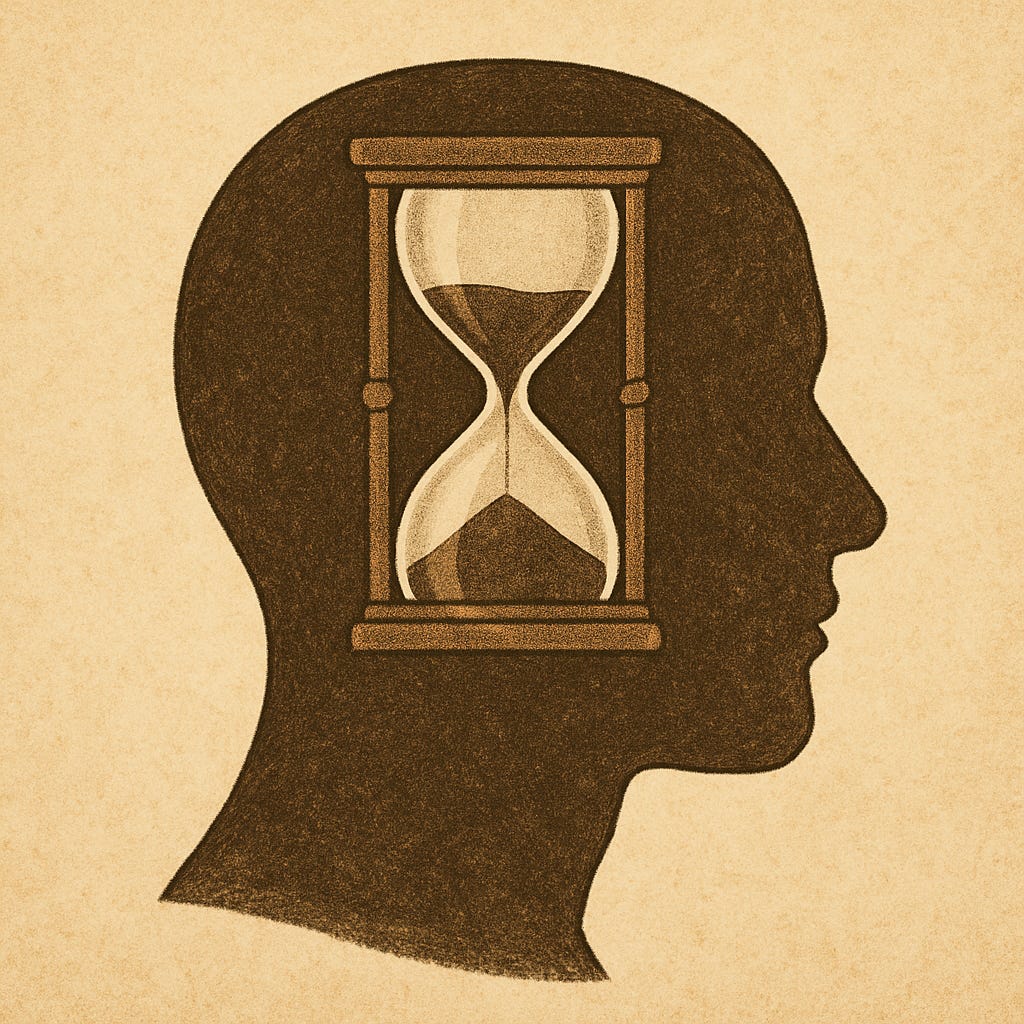
Slow opinion is about taking one’s time to form an opinion about someone or something. Life and people are often too complex to be captured in quick judgments and assessments. So, what if, when reading a news article or social media post that somehow affects us, instead of jumping to conclusions, we’d wonder:
what information might I be missing?
is this situation perhaps more nuanced than it seems?
might some of what I’m reading be biased?
could I be biased, or misunderstanding something?
is there any alternative explanation that could account for what’s going on?
are there any experts - or even just thoughtful, decent people - saying the opposite?
am I familiar enough with the counter-arguments?
These questions would, in many cases, lead us to postpone our judgment or opinion. We would want to corroborate or complete the information we have. And in the absence of complete information, we could give the facts and the people the benefit of the doubt, and thus perhaps be more charitable. We could consider all our opinions as preliminary: the opinions that we hold at the moment, but that are subject to change.
We don’t need to have an opinion on everything
Slow opinion also implies that there can be respect for the fact that someone does not right away have an opinion or make a decision, because they lack information, or have not had enough time to think about the matter. Such a suspension of opinion should not be seen as dragging one’s feet, as weakness or a lack of intelligence, but rather as a maturation process.
Downsides of doubting
Still, slow opinion probably shouldn’t be applied in any and all situations. During COVID, for instance, we saw many people “doing their own research”, believing they could achieve better opinions than experts. That’s probably false. Likewise, I can imagine that it served little purpose to be a slow opinionist about slavery in 18th century US. There is the risk of not condemning stuff that one should condemn - or being among the very last to condemn it. And there’s the danger of so-called analysis paralysis: thinking too hard, trying to take too many things into account and hence not coming to a conclusion, or only way too late. It’s a great way to annoy people, and it will block or delay every process.
So in a way, you may want to be a slow opinionist about slow opinion, and doubt the doubt (sorry, couldn’t resist).
In social movements
Any social or political movement - whether focused on justice, environment, identity, or economics - attracts passionate people. Passion is useful, but it often comes with strong convictions and quick judgments. When we finally “wake up” to something we previously overlooked, it’s tempting to think we now see everything clearly, and that there’s little left to question. Yet chances are we surround ourselves with like-minded people and we rarely hear good arguments for another stance - it’s the famous echo chamber.
And within any movement, the strategies, tactics, and communication choices are rarely as obvious as the core values. Here, slow opinion is essential. It helps us stay open to alternative approaches, listen more charitably to each other, and disagree without fracturing the very communities trying to create change. Slow opinion helps us pause and ask: what if other well-intentioned people see something I don’t?
A world of slow opinionsts
Imagine a world in which everyone takes the idea of slow opinion to heart. Where people, when participating in discussions, say “let me think about that, I’ll get back to you”. Where they ask: “do you have a good article about that which I can read?” A world where people are honest with themselves, are open to change their minds, and can disagree in a civilized way.
Taking a little more time - just a breath, a pause, a question - can make our judgments kinder, our conversations calmer, and our world a bit easier to share.
I am a big fan of slow opinion. I can see, in the rashness of the internet, how my friends angrily condemn some facts.... that end up being mere fabrications. And hey now we're in the deepfake era, it's so much easier to fool people.
Slow opinion is akin to the scientific method. You need to gather multiple lines of evidence.
However, I find it difficult to impart the importance of this mindset onto other people.
My buddhist meditation practice, giving space for my mind to come up with its own silliness, and the buddha's advice to never claim you are 100% correct (in the Canki Sutta, for instance) favour that mindset in me, but I find that people struggle with this. Probably because to be a slow opionist you need to gather more evidence, you need to have a scientific and detached way of looking into things, and that takes time and resources that people may not have had access to in their past.
Maybe I haven't tried strategically enough :)
Great piece, Tobias. I think this is a good companion to Aidan's latest, https://sandcastlesblog.substack.com/p/animal-activists-moral-uncertainty